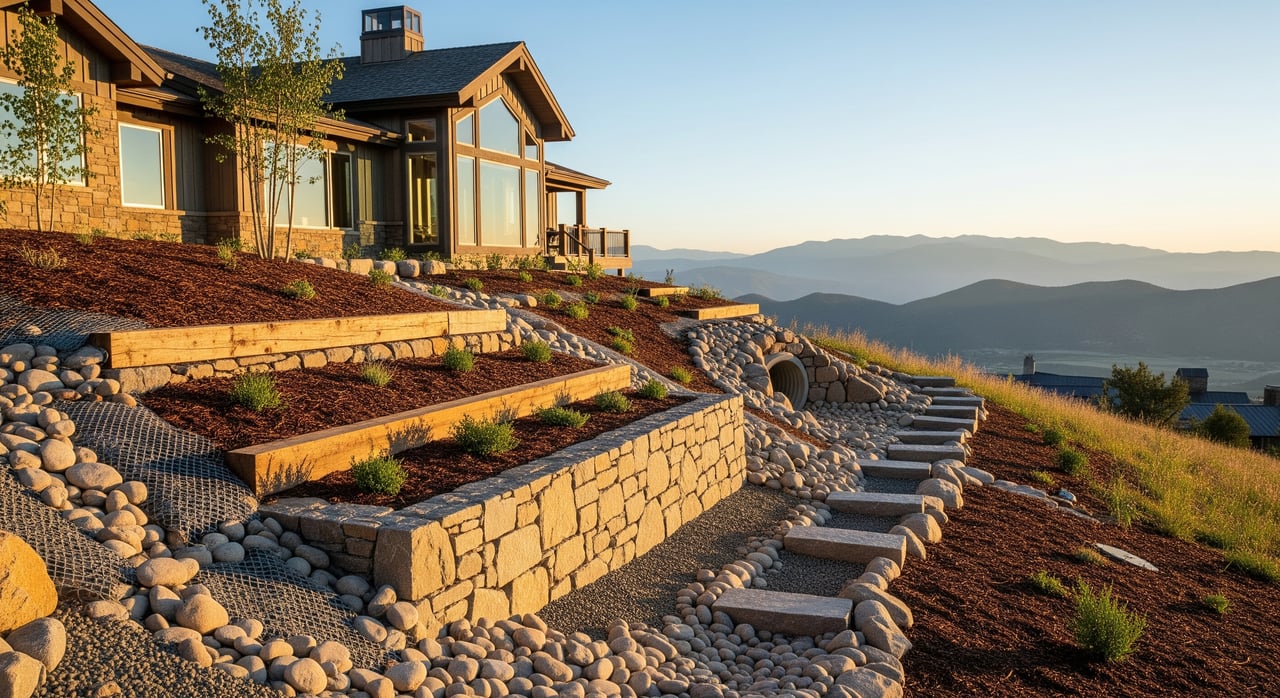
Does the first winter downpour carve little channels across your Rimforest slope? You are not alone. On our steep mountain lots, a few minutes of fast runoff can undo a season of yard work and send sediment toward the road. In this guide, you will learn simple, slope‑friendly steps that slow water, protect soil, and help you spot problems early, plus clear cues for when to call the County or a licensed engineer. Let’s dive in.
Why erosion control matters in Rimforest
Rimforest sits on steep, forested hillsides in the San Bernardino Mountains. Winters bring Pacific storms and occasional atmospheric rivers that deliver short, intense bursts of rain. In summer, a sudden monsoonal thunderstorm can also drop heavy rain in minutes. On sloped lots with shallow, rocky soils, that mix can quickly turn sheet flow into rills and gullies.
Wildfire history also matters. Recently burned areas lose protective groundcover, which increases runoff, rilling, and the chance of debris flows for several years after a burn. Your lot’s drainage path is local and specific, and many flows eventually feed nearby creeks within County watersheds. For parcel‑level clarity, review County watershed and parcel maps or USGS topo maps to see how water wants to move across your land.
Know your lot’s drainage
Start with a simple map. Walk your property after a light rain and again after a stronger storm, then note where water starts, where it concentrates, and where it leaves. Photograph driveway edges, culverts, and natural swales so you can compare changes over time.
Look for points that speed up water. Common culprits include roof downspouts that discharge onto bare slope, smooth concrete paths that aim water downhill, and driveway edges that collect and focus flow. Your goal is to slow, spread, and sink water into the ground without saturating areas near your foundation, retaining walls, or septic system.
Common hillside problems
Surface runoff and sheet erosion
When rain hits bare soil, it dislodges fine particles that wash downslope. As more water joins, it can cut rills that lengthen and deepen with each storm. If you see fan‑shaped sediment at the bottom of a slope, you are losing soil from higher up.
Blocked culverts and driveway channeling
Small culverts and driveway pipes often clog with needles, leaves, and branches. Once blocked, water overtops the roadbed or shoulder, which can erode edges quickly. Regular clearing before and after big storms keeps water where it belongs.
Channel incision and bank erosion
Natural swales can become incised during high flows. Banks undercut, vegetation loses footing, and the channel drops, which speeds water even more. This can threaten fences, walkways, and drainfields downhill.
Slope instability warning signs
Shallow slides often announce themselves. Watch for new cracks across the slope, bulging at the toe, sudden leaning of fence posts or trees, and new seeps after storms. If you notice any of these, pause any DIY work and consider a professional evaluation.
Debris flows after fire
On burned or heavily cleared slopes, intense rain can trigger fast, sediment‑rich flows. These can carry branches and rocks and can damage anything in their path. Post‑fire, your short‑term goal is to keep soil in place until vegetation returns.
Slope‑friendly tactics you can do now
Preserve and plant vegetation
- Keep deep‑rooted native or drought‑tolerant plants to bind soil and break raindrop impact.
- Maintain defensible space for fire safety while retaining groundcover downslope where possible. Work with local fire guidance to balance safety and soil stability.
Use mulch and erosion blankets
- Place a layer of straw or wood fiber mulch on exposed soil to reduce rilling until plants establish.
- On steeper disturbed areas, install photo‑biodegradable erosion control blankets or jute netting to hold seed and soil in place.
Add small grade breaks and terraces
- Create short, low terraces or vegetated benches to reduce slope length and slow water.
- Use rocks, logs, or planted edges to form stable breaks. Keep them small and follow the natural contour.
Build gentle swales and infiltration areas
- Shape shallow, vegetated swales along contour lines to guide water slowly across the slope.
- Capture roof and driveway runoff in infiltration areas downslope of hard surfaces, but avoid adding water near foundations, retaining walls, or septic systems.
Tune up driveways and culverts
- Keep driveways porous where you can, for example gravel or permeable pavers, to reduce runoff.
- Add splash blocks or small rock aprons at downspout and pipe outlets to dissipate energy and limit scour.
- Clean culverts, inlet screens, and check dams before the rainy season and after major storms.
Place rock where flows concentrate
- Use riprap or rock aprons at outfalls, driveway crossings, and channel toes to resist scour.
- Key rocks into the slope and size them to the expected flow. Poorly placed rock can redirect water and worsen erosion, so place carefully.
Build the right retaining walls
- Small gravity or dry‑stack stone walls can stabilize minor terraces.
- Taller walls or any wall holding saturated soils should be engineered and include proper drainage, such as weep holes and subdrains.
Install simple sediment traps
- Create small forebays, rock check dams, or debris screens upstream of culverts and outlets to catch needles and sediment.
- Plan for routine cleanouts, especially before heavy rain.
Take extra steps after wildfire
- Use temporary mulch, straw wattles on contour, and sediment control fences to slow water and trap sediment.
- Replant with suitable natives as soon as conditions allow to restore cover and root strength.
Your seasonal inspection checklist
A steady routine keeps small issues from becoming big ones. Use this simple schedule.
- Pre‑season, late summer through early fall: do a full property check and maintenance.
- Before each forecasted heavy storm: clear culverts, inlets, and driveway drains.
- During storms: stay safe and observe only from a distance. Avoid walking on saturated slopes.
- Post‑storm, within 24 to 72 hours if safe: inspect for new rills, sediment fans, or damage.
- Annual check in late spring: after snowmelt, document changes and plan repairs.
As you walk the site, look for concentrated flow paths, clogged inlet screens, areas that stay wet more than a day or two, and any new cracking or tilting. Check retaining walls for shifting, mortar loss, or blocked weep holes. Note downstream impacts, such as sediment reaching the road or changes in public easements.
Document what you see. Take photos from the same spots each time and keep a simple log. This record helps if you later consult an engineer or apply for permits.
When to call in help
Contact County Flood Control or Public Works
Reach out when runoff from your property is overtopping a public road, creating hazards in the right of way, or if you suspect a blocked county culvert or failing catch basin. You can also request drainage improvement maps, maintenance records, and any known easements that affect your lot. Ask specifically about prior drainage or stabilization work near Rimforest and downstream capacity constraints.
Call a licensed civil or geotechnical engineer
Consult an engineer if you see signs of slope instability, such as new or spreading cracks, bulging at the slope toe, leaning trees or utility poles, or new springs after storms. Bring in a professional if you plan significant grading, deep cuts, tall retaining walls, or construction near the toe of a slope. Engineers can also help if erosion threatens foundations, septic systems, or if you need formal plans for permits or insurance.
Work with a landscape architect or erosion contractor
If you want a vegetation‑based stabilization plan, contour swales, or practical revegetation, a licensed landscape architect or erosion‑control contractor can design and install a plan that fits the site. Ask for help selecting native plants, erosion control materials, and the right sequence for installation before winter.
Handle emergencies
If an active slope failure threatens people, utilities, or roads, call 9‑1‑1 and your County emergency line. For imminent issues that affect public infrastructure, notify County Flood Control and local emergency services right away.
Understand permits and rules
Many slope stabilization projects, grading, and drainage alterations require County permits. Before any major earthwork, contact San Bernardino County Land Use Services or Building and Safety to learn what your project needs. Work inside the public right of way or that ties into County systems usually requires approval and may need stamped plans. If your property drains toward or borders federal lands, coordinate with the U.S. Forest Service as well.
Simple do’s and don’ts
Do
- Preserve and restore groundcover with suitable native plants.
- Install small contour swales, terraces, and sediment traps to slow water.
- Keep culverts, inlets, and debris screens clear before storms.
- Keep photo records and notes of conditions and maintenance.
- Contact County Flood Control to learn about drainage history and capacity.
Don’t
- Send roof or driveway runoff straight down a bare, steep slope.
- Add large impermeable surfaces without detention or infiltration downslope.
- Rely on small, temporary fixes on a moving slope. Get a professional opinion.
- Start large grading or build tall walls without permits and engineering.
Getting local records and support
You have several resources. The San Bernardino County Flood Control District and Public Works can provide drainage project maps, maintenance records, and contacts for the Rimforest area. San Bernardino County Land Use Services and Building and Safety can explain grading and building permit requirements and share parcel and zoning records. For wildfire history and defensible space guidance, review resources from Cal Fire and the County Fire Department. If your parcel is near National Forest land, the U.S. Forest Service has watershed and post‑fire erosion information. Technical references on bioengineering and plant selection are available from the California Department of Water Resources and the NRCS.
When you contact agencies, be specific. Ask for any recorded drainage improvements near your parcel, upstream constraints that might send more water your way, and downstream capacity limits that could affect your outfalls. Request inspection or maintenance logs for nearby culverts and basins if available.
Ready to plan next steps?
A little preparation goes a long way on a Rimforest hillside. Start with the simple maintenance in this guide, document changes after storms, and reach out early if you see warning signs. If you are thinking about selling or improving your mountain home, local support can help you plan smart fixes and avoid surprises at permit time.
Have questions about your slope or drainage before the next rainy season? Connect with Crestline Real Estate to schedule a free home consultation with our local mountain experts.
FAQs
Best timing for erosion maintenance in Rimforest
- Complete major maintenance in late summer or early fall, then recheck before every forecasted heavy storm.
Signs that my slope is moving, not just eroding
- Look for new or widening cracks, bulging at the toe, leaning trees or posts, and new seeps or springs after storms.
Permits for small terraces in San Bernardino County
- Many grading and stabilization projects need permits, so confirm requirements with County Land Use Services before you start.
Post‑wildfire steps for a Rimforest lot
- Install temporary mulch and wattles on contour, add simple sediment traps, and replant with suitable natives as conditions allow.
Who to call if my runoff affects a county road
- Contact the San Bernardino County Flood Control District or Public Works to report hazards or blocked culverts affecting public rights of way.